Chasing Savvy: Beat the Light Pollution
Prioritize Dark Skies Over A Northern Location

One thing many people don’t realize is that they don’t always need to travel north to see Northern Lights. A new G3 Storm Watch has been issued as I write this, predicting strong Aurora for December 9, 2025, and that could push the Northern Lights very far south. Beyond getting out of cloud clover, a dark sky is arguably the most important piece of the puzzle.
Yes, those in the north have a much higher probability of seeing bright Aurora and better chances of catching Aurora directly overhead or dancing on every horizon, but fantastic Northern Lights often appear to the naked eye in southerly locations where the skies are truly dark. Sub-auroral arcs can even be seen in the west or southwest, as I describe in my public programs.
Ever since I got started chasing Northern Lights in the suburbs in 2012, I’ve known this to be true. And there are exceptions to every rule, of course. But the outcome of prioritizing darkness over northward travels has never been more evident to me than this year, when I moved to a new home in Bortle 4 skies. I’ve seen more Aurora at home at the 42nd Parallel in the last four months than I ever caught at home in Bortle 6.
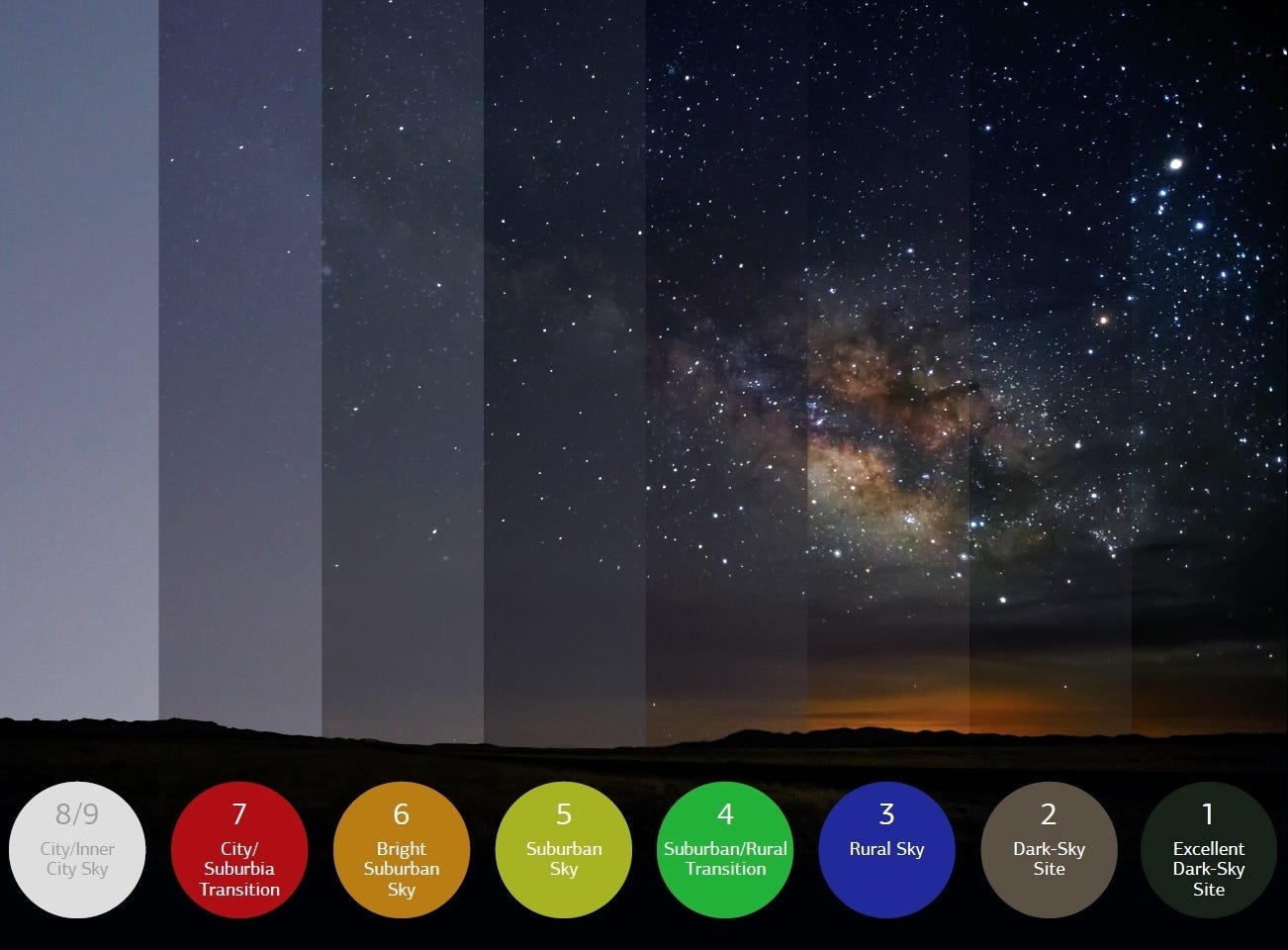
How Does Your Sky Rank on the Bortle Scale?
If you haven’t heard of it, let me introduce you to the Bortle Scale. It’s described this way by the Sky Glow Project: “The Bortle Scale is a nine-level numeric measure of the night sky’s brightness in a particular location. It quantifies the astronomical visibility of celestial objects and the interference caused by light pollution.”
Created by John E. Bortle in 2001, the scale helps amateur astronomers evaluate the darkness of varying skies for night observation. The scale ranges from Class 1, the darkest skies on Earth, to Class 9, where all the artificial light in the inner city can obscure the view of the stars.
Using Light Pollution Maps
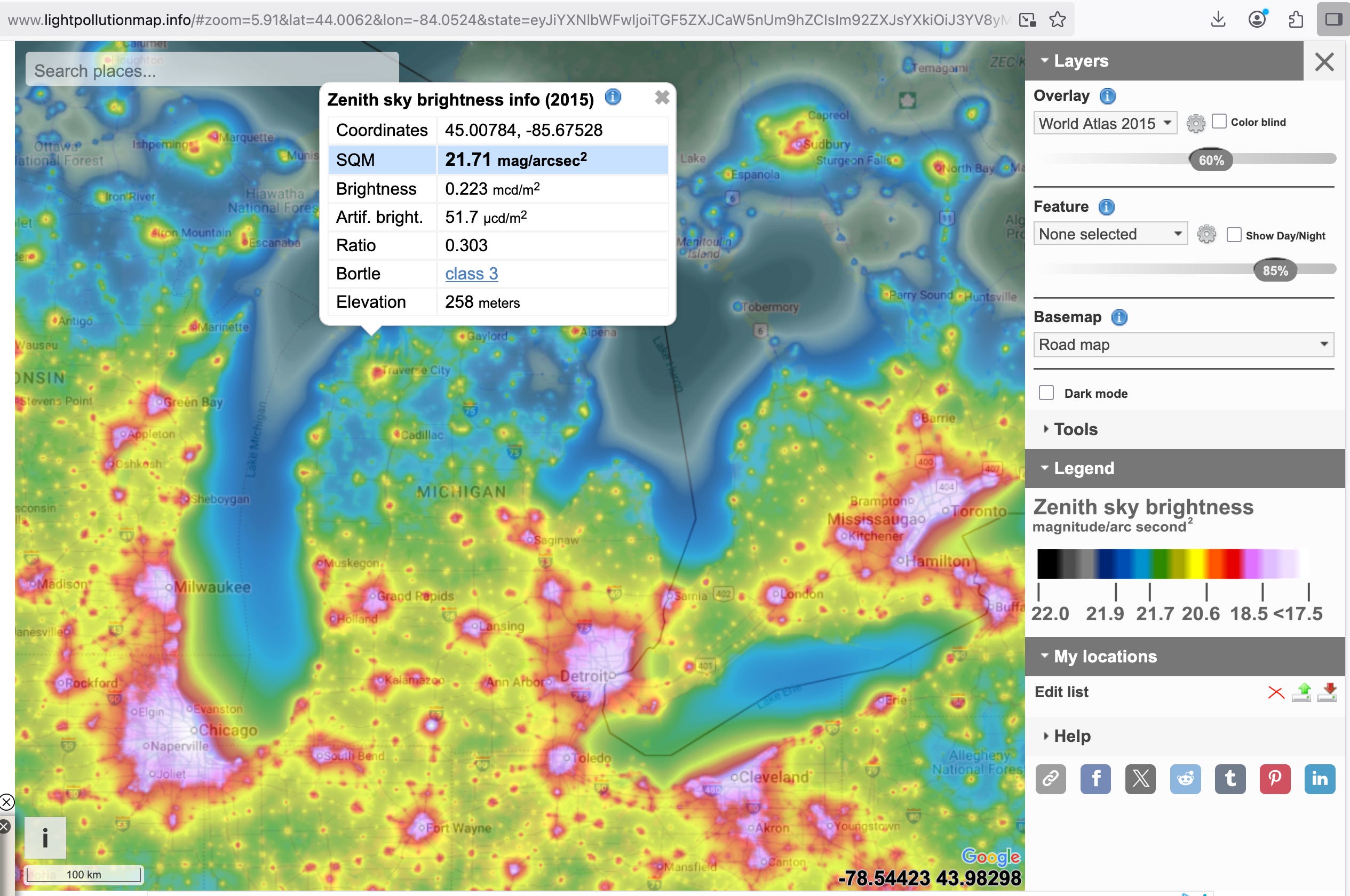
The good news is there are plenty of tools out there to help you find the darkest skies in your area, or any area where you’re interested in seeing the Northern Lights! I highly recommend this one, which will not only tell you your geographic coordinates but also the classification of your skies on the Bortle Scale, with a simple click on your location.
Explore the Light Pollution Map: https://www.lightpollutionmap.info/
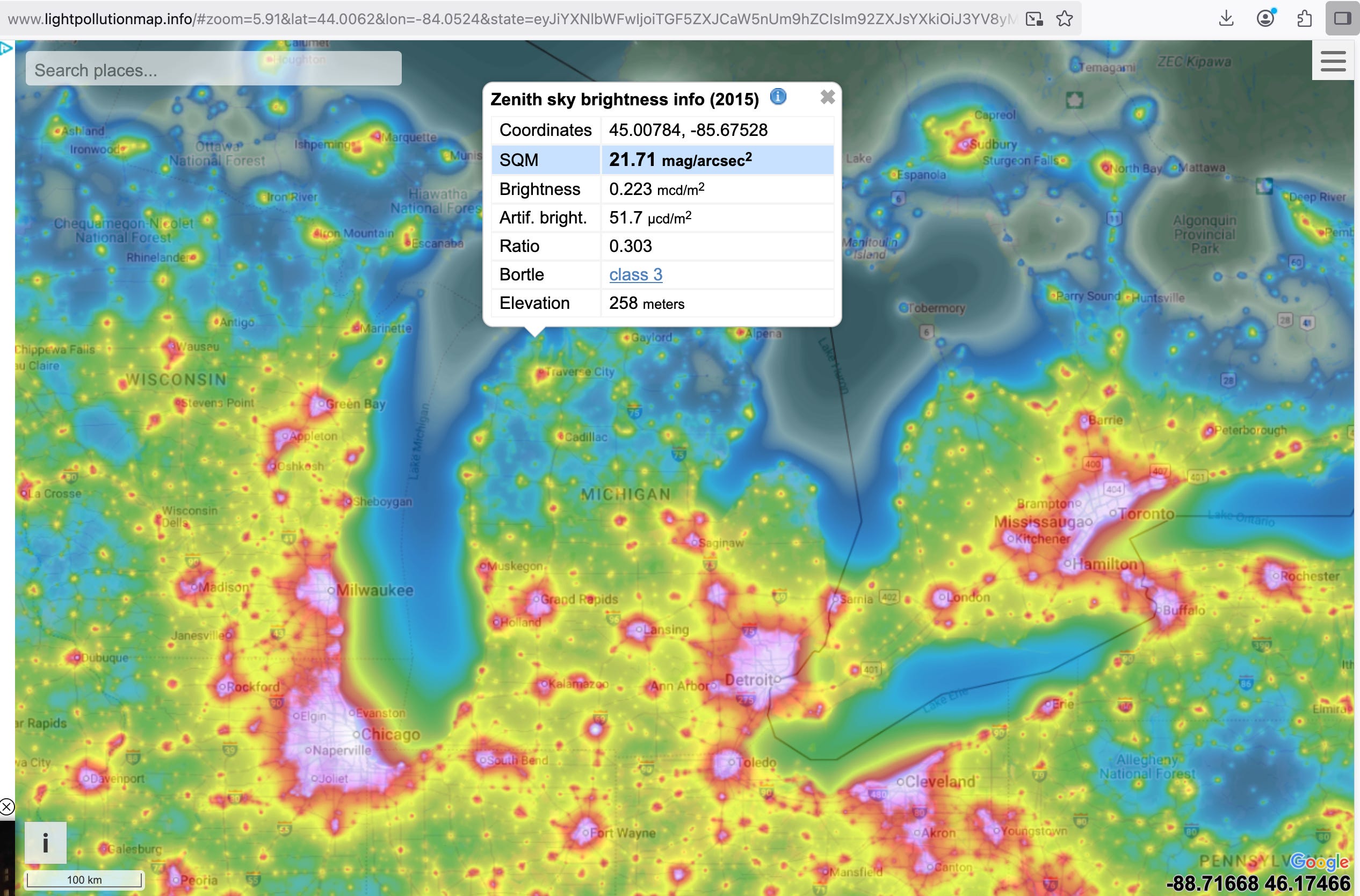
This resource, like many others, comes with tools on the sidebar and navigation menus to complement your search. While some of them may be paid features, many of the tools are included with the free version. They range from cloud cover forecast models to Aurora predictions, although I’m skeptical that any app can reliably guide you to Aurora when that’s not the main focus of the app. The cloud cover overlay could be useful, though!
There’s An App for That
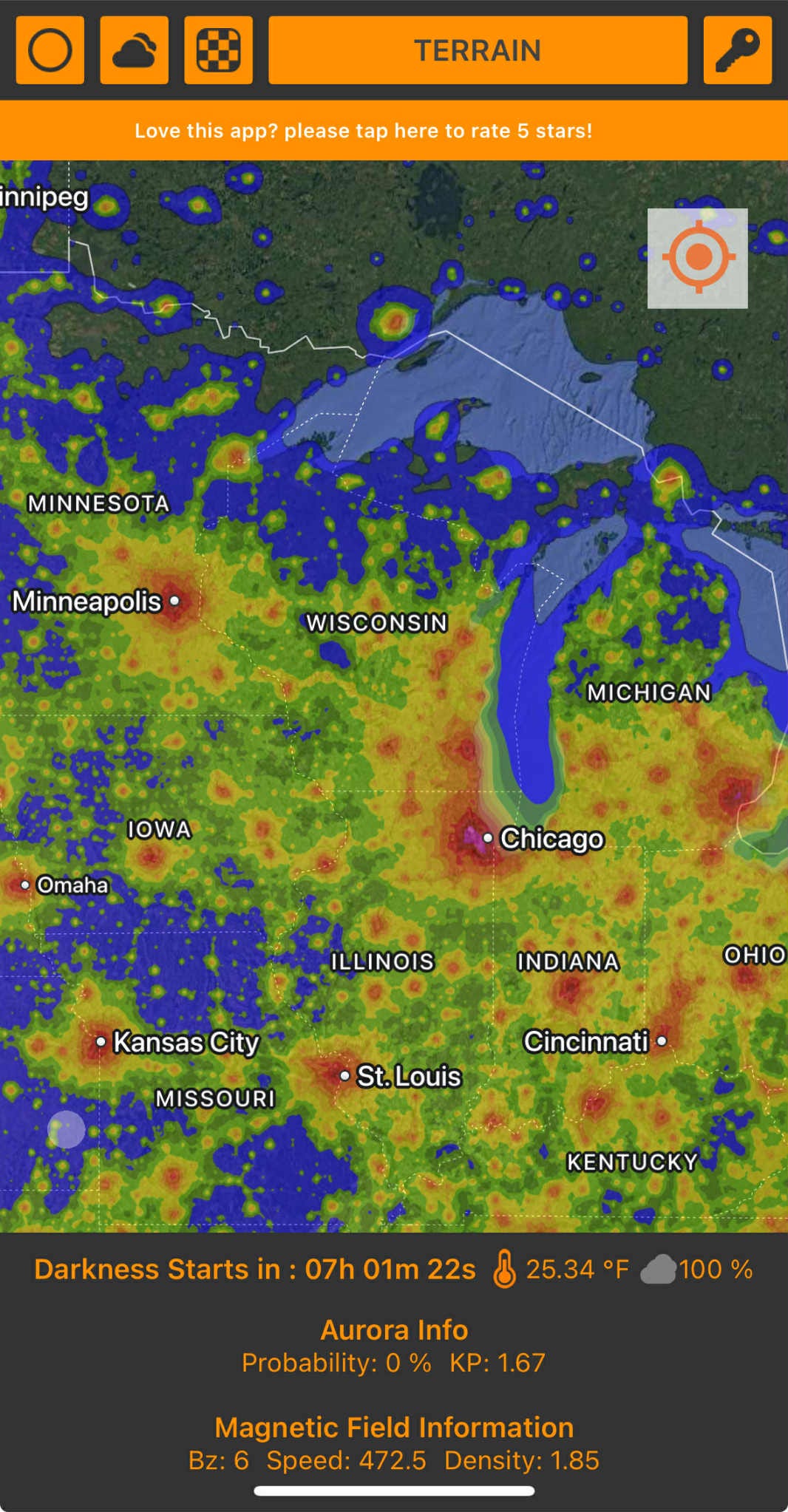
You can also get light pollution apps on your device, with free and paid versions available. Notice the app also includes information about the basic conditions that create Aurora, especially under the Magnetic Field Information.
I highly recommend the Light Pollution Map app, pictured below.